I. How to Use This Library
Purpose: A curated reference library supporting implementation of DOT&PF’s Statewide Tribal Consultation Policy. This library compiles key legal authorities, transportation program requirements, consultation best practices, Alaska-specific resources, and recommended desk references related to Alaska Tribal consultation practice, Alaska Native cultures and governance, and Alaska’s legal and regulatory framework.
Use the headings to locate the relevant governing authority, statute, regulation, or practice area (e.g., consultation, NEPA, Section 106, Section 4(f), planning/programming).
Each entry provides a citation and/or a direct link to an official or widely used source for reference and verification.
Recommended books/desk references are listed separately for the physical library and for staff onboarding and training.
Maintenance (Internal Use)
Assign a dedicated owner (e.g., DOT&PF Tribal Team) responsible for periodically validating links and updating this library to reflect changes in federal regulations, executive actions, or state policies.
For internal use, pair this online library with: (1) a digital repository organized to mirror these sections, (2) a brief ‘Start Here’ guide for new staff, and (3) a curated book list for the physical library.
II. Alaska Native Cultural, Language, & Knowledge Resources: Culture, language, oral history, subsistence context, regional institutions
Culture, oral tradition, and Indigenous knowledge systems. This section intentionally reflects resources and voices spanning Alaska’s twelve Alaska Native cultural regions, including Iñupiat, St. Lawrence Island Yupik, Yup’ik, Cup’ik, Athabascan, Tlingit, Haida, Tsimshian, Eyak, Alutiiq/Sugpiaq, Unangax̂ (Aleut), and Chugach peoples.
Authored Works & Memoirs
III. Alaska Native Regional Entities and Resources
Alaska Native Regional Corporations, Regional Native Nonprofits, Regional Tribes, and other relevant Regional Resources.
Note: The nonprofit organizations listed below are not consultation authorities, but they frequently serve as regional service providers, conveners, and technical assistance organizations for Tribes and communities within each ANCSA region. They provide services, coordination, and advocacy support within their regions and do not replace government-to-government consultation with federally recognized Tribes.
Regional Nonprofit: Copper River Native Association (CRNA) https://www.crnative.org
Regional Nonprofit: Aleutian Pribilof Islands Association (APIA) https://www.apiai.org
Regional Tribe: Inupiat Community of the Arctic Slope (ICAS) https://www.icasalaska.org
Regional Nonprofit: Kawerak, Inc. https://kawerak.org
Regional Nonprofit: Bristol Bay Native Association (BBNA) https://bbna.com
Regional Tribal Government (Pending Formal Status): YK Regional Tribal Government (YKRTG). https://ykrtg.org
Regional Nonprofit: Chugachmiut https://www.chugachmiut.org
Regional Nonprofit: Cook Inlet Tribal Council (CITC) https://citci.org
Regional Nonprofit: Tanana Chiefs Conference (TCC) https://www.tananachiefs.org
Regional Nonprofit: Kodiak Area Native Association (KANA) https://www.kanaweb.org
Regional Nonprofit: Maniilaq Association https://www.maniilaq.org
Additional Statewide (archives, languages, oral history collections)
Alaska Native Heritage Center. https://www.alaskanative.net
Alaska Native Language Center (ANLC), UAF https://www.uaf.edu/anlc
Project Jukebox (UAF) – Alaska Oral History Collections. https://jukebox.uaf.edu
Rasmuson Library (UAF) – Polar Regions Collections. https://library.uaf.edu/aprca
Sealaska Heritage Institute https://www.sealaskaheritage.org
Alutiiq Museum https://alutiiqmuseum.org
Resources for Culturally Responsive Teaching
Alaska Native Knowledge Network (ANKN) Alaska Native Knowledge Network
Educator Cultural Resources (UAF) A curated list of cultural organizations and learning tools aimed at helping teachers incorporate Alaska Native cultures and histories into the classroom. TASK Home | Teacher Ambassadors Sharing Knowledge
Smithsonian Arctic Studies Center via Smithsonian Learning Lab. Free digital collections, lesson plans, historic artifacts, videos, and Alaska Native culture materials suitable for classroom or independent learning. Resources :: Arctic Studies Center | Smithsonian Learning Lab
Alaska Historical Society (For Teachers & Students) Links to Alaska Native history, cultural studies, teaching modules, and background on Alaska Indigenous peoples. For Teachers and Students - Alaska Historical Society
Alaska Teacher Cultural Responsiveness Guides Guidelines and strategies for preparing educators to teach in culturally respectful ways that engage Native students and honor Indigenous knowledge systems. prep teach for pdf
Alaska Native Education Curriculum Projects Links to Alaska Native languages and civics lesson plans, including curricula like Alaska Native civics and government developed for high school students. About the Alaska Native Curriculum and Teacher Development Project
Alaskan Native Languages resources (https://www.alaskanativelanguages.org/) to support language learning and cultural context.
Teacher marketplaces and lesson collections with Alaska Native culture lessons and units (e.g., Teachers Pay Teachers). All Resources | TPT
ArcGIS StoryMaps The Web Atlas of Alaska Native Traditional Place Names (2023). An interactive digital atlas documenting Alaska Native traditional place names across regions, highlighting Indigenous geographic knowledge, language, and place-based meaning. This resource supports regional context, landscape awareness relevant to transportation planning, environmental review, consultation, and should be used as a contextual reference rather than a substitute for Tribe-specific consultation.
IV. Alaska Native Statewide Organizations & Capacity-Building Resources: Statewide organizations, education, governance, technical assistance
This section includes other statewide Alaska Native organizations that frequently support Tribal governments, ANCSA corporations, and rural communities through policy advocacy, leadership coordination, technical assistance, housing, and economic development. These organizations are not consultation authorities, but they are often relevant context partners and information resources.
Alaska Federation of Natives (AFN)
Statewide Alaska Native organization representing federally recognized Tribes, Alaska Native regional and village corporations, and Native nonprofit organizations. AFN serves as a central forum for policy advocacy, intergovernmental coordination, and statewide Alaska Native priorities. https://nativefederation.org
Alaska Native Chamber (ANC)
Statewide organization representing Alaska Native–owned businesses and entrepreneurs. The Alaska Native Chamber focuses on economic development, business advocacy, networking, and capacity-building to support Alaska Native economic self-determination and strengthen participation in regional and statewide economies. https://alaskanativechamber.com
Alaska Tribal Administrators Association (ATAA)
Statewide professional association representing Tribal administrators and senior Tribal staff across Alaska. ATAA supports capacity-building, peer networking, training, and information-sharing related to Tribal governance, administration, federal programs, and intergovernmental coordination. While not a consultation authority, ATAA is a key resource for understanding Tribal administrative structures and operational context. https://ataaak.org
Alaska Native Village Corporation Association (ANVCA)
Statewide association representing Alaska Native village corporations. ANVCA focuses on advocacy, education, and support related to ANCSA village corporation interests, including land, governance, and economic sustainability. https://anvca.org
ANCSA CEO Association (ARA)
Membership organization composed of chief executive officers of Alaska Native regional and village corporations organized under the Alaska Native Claims Settlement Act (ANCSA). The Association provides a forum for coordination on corporate governance, economic development, and issues affecting ANCSA corporations statewide. https://www.ancsaceos.org
First Alaskans Institute (FAI)
Statewide Alaska Native nonprofit organization dedicated to advancing Alaska Native peoples and communities through leadership development, policy advocacy, cultural stewardship, and community engagement. FAI focuses on strengthening Alaska Native voices, promoting equity and inclusion, and supporting long-term social, cultural, and economic self-determination. https://www.firstalaskans.org/
Rural Alaska Community Action Program, Inc. (RurAL CAP)
Statewide nonprofit organization providing housing, energy efficiency, early childhood education, and community development services in rural Alaska. RurAL CAP frequently partners with Tribes, villages, and regional organizations on infrastructure, housing, and capacity-building initiatives. https://www.ruralcap.org
V. Alaska Specific Legal Framework: ANCSA, ANILCA, subsistence, Alaska sovereignty & jurisdiction cases, Alaska NEPA standards
Alaska Native Claims Settlement Act (ANCSA): Alaska Native Claims Settlement Act, Pub. L. No. 92-203, 85 Stat. 688 (1971) (codified at 43 U.S.C. § 1601 et seq.). [Source] Core statute establishing Alaska Native regional and village corporations and land/monetary settlement structure.
CRS Background (ANCSA overview): Cong. Rsch. Serv., Alaska Native Lands and the Alaska Native Claims Settlement Act (Dec. 22, 2021) (report page). [Source] Nonpartisan congressional summary useful for staff training, orientation, and quick-reference explanations.
VI. Alaska Specific Legal and Policy Desk References: Treatises, scholarship, foundational books, federal Indian law references
These resources are intended for background understanding and preparation and do not replace Tribe-specific consultation or authorization to use or interpret cultural knowledge
Hard Copy Core Desk References
Alaska Native law, sovereignty, and governance in Alaska
Consultation Practices
Legislative and History Collections
Alaska Tribes (authoritative lists)
Additional Desk References
In addition to the authorities listed above, DOT&PF should maintain the following internal and Alaska-specific reference materials to support project planning, consultation preparation, and institutional continuity:
Cultural property and confidentiality protection frameworks (relevant to consultation). These matter directly when Tribes share sensitive cultural information:
VII. Consultation Law and Policy Framework: State and federal consultation authorities, ANCSA consultation requirement
State of Alaska Foundations (Policy / Government-to-Government)
Alaska Administrative Order No. 186 (Sept. 29, 2000)
State policy recognizing the governmental status of Alaska’s federally recognized Tribes and establishing a framework for government-to-government relations.
Alaska Department of Transportation and Public Facilities, Tribal Relations, Resource Library
Current DOT&PF collection of foundational Tribal-relations documents, including Administrative Order No. 186 and the 2001 Millennium Agreement. [Source] Program landing page for DOT&PF tribal relations; useful for public-facing references and internal onboarding
Federal Consultation Authorities (Executive and Cross-Cutting Requirements)
Executive Order 13175 (Tribal Consultation) 65 Fed. Reg. 67249 (Nov. 9, 2000). [Source] Core federal consultation directive; defines ‘policies that have tribal implications’ and requires meaningful and timely input.
Presidential Memorandum on Tribal Consultation (Biden, 2021): Memorandum on Tribal Consultation and Strengthening Nation-to-Nation Relationships, 86 Fed. Reg. 7499 (Jan. 29, 2021). [Source] Presidential directive to federal agencies to strengthen EO 13175 consultation implementation plans; widely cited in modern consultation policy updates.
Executive Order 13007 (Indian Sacred Sites) 61 Fed. Reg. 26771 (May 29, 1996). [Source] Requires land-managing agencies (where applicable) to accommodate access and ceremonial use of sacred sites and avoid adverse effects; supports consultation practice around sacred sites/confidentiality. Relevant for access, confidentiality, and early engagement.
Civil Rights/Equity Authorities Often Intersecting with Consultation/Public Involvement
Title VI (nondiscrimination in federally funded programs): Title VI of the Civil Rights Act of 1964, 42 U.S.C. § 2000d et seq. [Source] Nondiscrimination requirements for federally funded programs. Applies to recipients of federal financial assistance (including transportation); informs equitable engagement, access, and nondiscrimination in processes.
Consultation: Best Practices / Models
Administrative Conference of the United States (Consultation in regulatory policymaking): Admin. Conf. of the U.S., Consultation with State, Local, and Tribal Governments in Regulatory Policymaking (June 20, 2025). [Source] Summarizes best practices and emphasizes early engagement, recordkeeping, and minimizing administrative burden—useful for DOT policy implementation.
Congressional ‘Federal-Tribal Consultation’ background (CRS): Cong. Rsch. Serv., Federal-Tribal Consultation: Background and Issues for Congress (June 12, 2024). [Source] Provides a clear overview of consultation authorities and agency practices; useful for legal review and staff orientation.
Consultation with ANCSA Corporations (Federal Appropriations Requirement)
Consolidated Appropriations Acts: ANCSA corporation consultation requirement: Pub. L. No. 108-199, div. H, § 161, 118 Stat. 452 (2004), as amended by Pub. L. No. 108-447, div. H, title V, § 518, 118 Stat. 3267 (2004). [Source] Statutory requirement that OMB and all federal agencies consult with Alaska Native corporations on the same basis as Indian Tribes under EO 13175 and where required by federal law or funding conditions; frequently incorporated into agency consultation policies.
Office of Mgmt. & Budget: Guidance referencing ANCSA corporation consultation requirement: Memorandum M-10-33 (July 30, 2010) (EO 13175 implementation guidance; notes ANCSA corporation consultation requirement). [Source] Practical federal implementation guidance; helpful for explaining the ‘same basis as’ concept in funding-conditional contexts.
DOI Consultation Policy: ANCSA corporations (binding DOI policy): U.S. Dep’t of the Interior, 512 DM 6, Department of the Interior Policy on Consultation with ANCSA Corporations (Nov. 30, 2022). [Source] Useful model language for consultation with ANCSA corporations (definitions, scope, invitations, and recordkeeping expectations).
EPA ‘Guiding Principles’ for Consulting with ANCSA Corporations: U.S. Envtl. Prot. Agency, Guiding Principles for Consulting with ANCSA Corporations (Jan. 2022). [Source] Another model for practice: who to invite, how to document, and how to coordinate when an ANC is included due to federal funding conditions.
VIII. Relevant Case Law
Foundational Alaska Sovereignty & Jurisdictional Cases. These cases define who Tribes are in Alaska, what sovereignty means, and why consultation obligations arise even where most lands are not “Indian country.”
Alaska Subsistence & Land-Use Protection Cases (ANILCA Context) These cases establish substantive standards that inform consultation and environmental review where subsistence resources may be affected.
Alaska NEPA Standards for Transportation & Infrastructure. These cases are included only where they provide Alaska-specific or frequently cited standards, not to restate general NEPA doctrine.
Supplemental Federal Consultation & NEPA Enforcement Cases (Reference Only) The following non-Alaska-specific cases are frequently cited in Alaska litigation and agency practice for general principles of early, meaningful Tribal consultation and substantive consideration of Tribal concerns. They are included for reference and training, not as primary Alaska doctrine.
Quechan Tribe v. U.S. Department of the Interior (2010)
Quechan Tribe v. U.S. Department of Transportation (2013)
Standing Rock Sioux Tribe v. U.S. Army Corps of Engineers, 985 F.3d 1032 (D.C. Cir. 2021)
Oglala Sioux Tribe v. U.S. Nuclear Reg. Commission, 896 F.3d 520 (D.C. Cir. 2018)
Colorado River Indian Tribes v. Marsh (1985)
Te-Moak Tribe v. DOI (2010)
South Fork Band Council v. DOI (2009)
Muckleshoot Indian Tribe v. U.S. Forest Service (1999)
Pit River Tribe v. U.S. Forest Service (2006)
Yurok Tribe v. U.S. Bureau of Reclamation (2017)
IX. Transportation and Environmental Legal Authorities: Planning, NEPA, Section 106, Section 4(f), Title VI
Statewide & Metropolitan Transportation Planning Regulations: 23 C.F.R. pt. 450 (Planning Assistance and Standards). [Source] Core planning and programming rules; includes participation/consultation provisions relevant to long-range planning, LRTP/TIP/STIP development, and corridor studies.
NEPA Transportation Implementing Regulations – 23 C.F.R. Part 771: Primary FHWA/FTA/FRA NEPA procedures for transportation projects, including coordination and project development requirements. [Source] Note: See 2025 Interim Final Rule for recent amendments and transition guidance.
NEPA Part 771 Interim Final Rule (2025): Interim Final Rule amending portions of 23 C.F.R. pt. 771 (June 30, 2025). [Source] Summarizes regulatory updates, implementation changes, and transition guidance affecting transportation NEPA procedures. To be read in conjunction with the standing 23 C.F.R. pt. 771 regulations.
FHWA Environmental Review Toolkit (NEPA / Tribal Consultation): Fed. Highway Admin., Environmental Review Toolkit – NEPA Implementation Resources (webpage). [Source] Central hub for FHWA NEPA guidance, Q&As, and implementation resources used by practitioners.
NCHRP Report 690: National Academies of Sciences, Engineering, and Medicine. A Guidebook for Successful Communication, Cooperation, and Coordination Strategies Between Transportation Agencies and Tribal Communities. NCHRP Report 690. Washington, DC: National Academies Press, 2011. [Source]
Cultural Resources / Historic Preservation – NHPA Section 106 Consultation
Section 106 Regulations: (Authoritative Regulation) 36 C.F.R. pt. 800, Protection of Historic Properties (Advisory Council on Historic Preservation). [Source] The binding federal regulations implementing Section 106 of the National Historic Preservation Act. These regulations establish required consultation procedures, including consultation with Indian Tribes and Native Hawaiian Organizations, and include provisions addressing emergency actions, confidentiality, and coordination with NEPA.
Section 106 Regulations (Official PDF – Training/Field Reference): Protection of Historic Properties, 36 C.F.R. pt. 800 (ACHP PDF, regs-rev04.pdf; eCFR). [Source] An official PDF version of the Section 106 regulations provided for convenience and accessibility. Substantively identical to the codified regulations in the Code of Federal Regulations and suitable for training, printing, and field reference.
Supplemental guidance and training materials are maintained by ACHP and accessible through its official online resource portal. [Source]
Section 4(f) – Parks, Refuges, and Historic Sites
Section 4(f) Statutory Codification: 49 U.S.C. § 303 (Section 4(f) requirements). [Source] Statutory protections for significant publicly owned parks, recreation areas, wildlife/waterfowl refuges, and historic sites; often intersects with Section 106 and NEPA consultation.
FHWA Section 4(f) Guidance Page: Fed. Highway Admin., Section 4(f) Guidance and Legislation Documents (webpage). [Source] Practitioner guidance, examples, and interpretive materials for implementing Section 4(f) in project delivery.
X. Resources: Bibliography, Books, Maps, and Hard Copy Library & Teaching References
Alaska Native Language Regions (Indigenous Peoples & Languages of Alaska) This authoritative map shows the traditional Indigenous language regions of Alaska (based on linguistic and ethnographic research). It is the most widely accepted geographic depiction of Alaska Native linguistic territories, widely used for cultural context, educational purposes, and regional orientation.
Maintaining the resource library is a shared responsibility across the Alaska DOT&PF team—if you notice broken links, missing documents, or outdated information, please notify dot.tribal.team@alaska.gov so we can keep resources accurate and up to date.
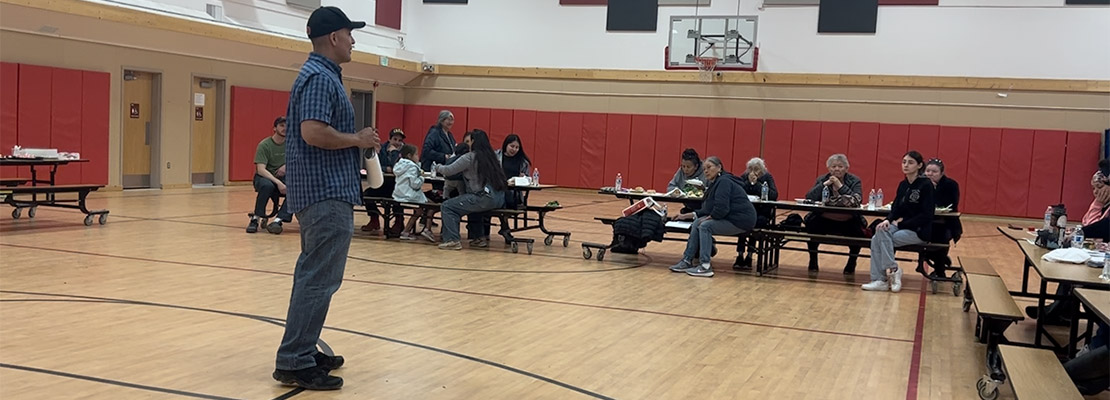
The Federal Highway Administration (FHWA) has a government-to-government relationship with Indian Tribes. This special relationship is affirmed in treaties, Supreme Court decisions, and Executive Orders, and provides that FHWA and other Federal agencies consult with Tribes regarding policy and regulatory matters. Section 106 of the NHPA also requires that FHWA (this responsibility has not been delegated to the State of Alaska) consult with Tribes for undertakings that may affect properties considered to have traditional religious and cultural significance. www.environment.fhwa.dot.gov/histpres/tribal.htm#consult
This policy reinforces government-to-government relationships between the Department of Transportation and Public Facilities (department) and the tribes in Alaska through consultation on significant matters of mutual concern.
This policy provides guidance to all employees of the department involved in any departmental action(s) that significantly or uniquely affect a tribe in Alaska, and pertaining to any tribal action that significantly or uniquely affects this department. It also reinforces the foundation for establishing and maintaining effective government-to-government communications between the department and the tribes in Alaska, and promotes consultation and coordination with these tribes, with the goal of ensuring that the department conducts consultation in a culturally sensitive manner. Policy and Procedure 01.03.010 Government-to-Government Relations with the Federally-Recognized Tribes of Alaska